
堆排序(Heap Sort)
更新: 10/24/2025 字数: 0 字 时长: 0 分钟
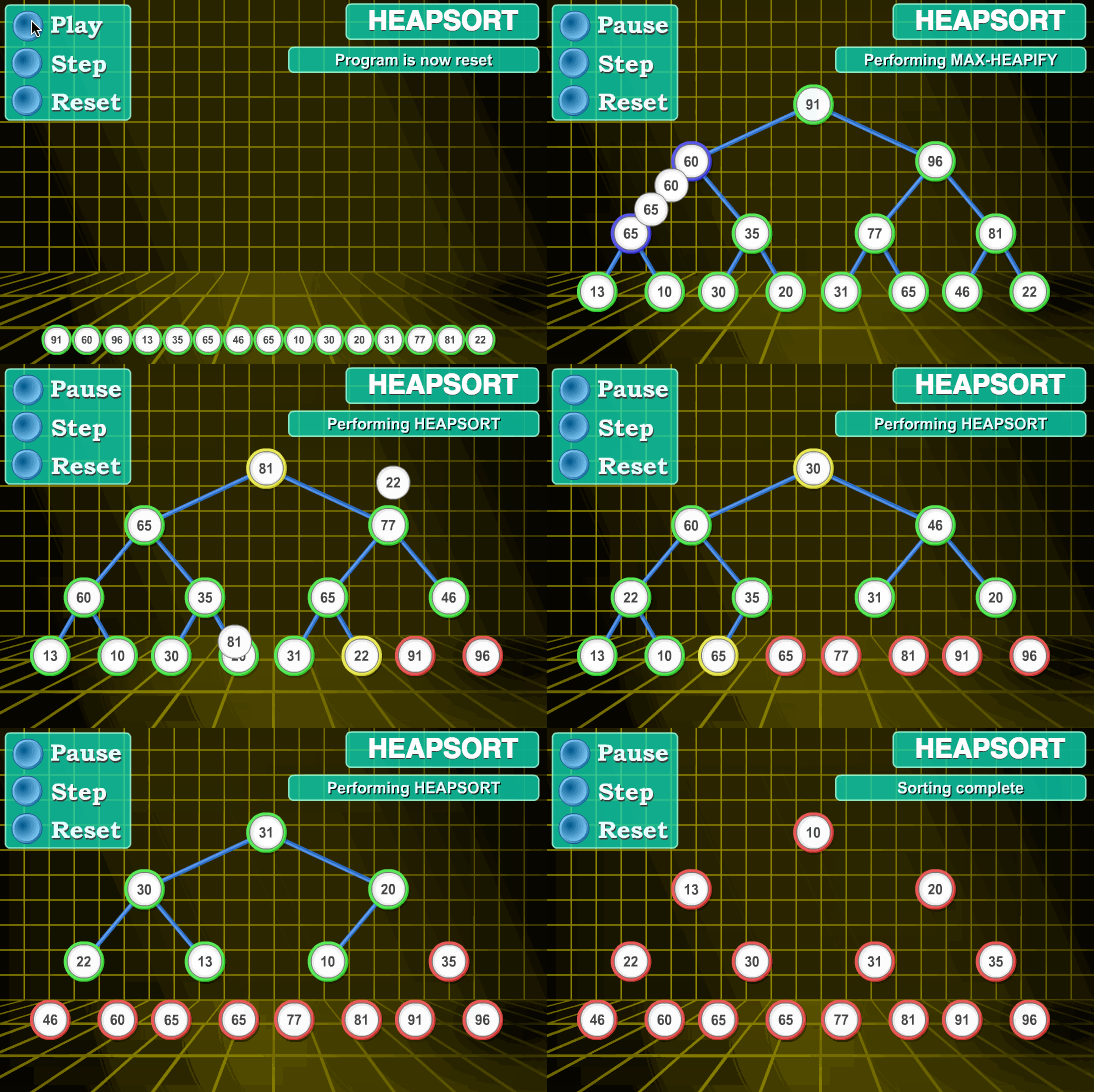
1.流程
对序列进行原地建堆(Heapify)
重复执行以下操作,直到堆中只剩下一个元素
- 将堆顶元素(当前堆中的最大值)与堆的最后一个元素交换位置
- 将堆的有效大小减一
- 对新的堆顶元素执行下滤操作,使其重新满足堆性质
下滤操作的时间复杂度为O(logn),整个堆排序的时间复杂度为O(nlogn)。
2.实现
先要拷贝堆化的代码
javaprivate void heapify() { for (int i = (size >> 1) - 1; i >= 0; i--) { siftDown(i); } } private void siftDown(int index) { E e = this.elements[index]; int half = size >> 1; while (index < half) { int childIndex = (index << 1) + 1; E child = this.elements[childIndex]; int rightChildIndex = childIndex + 1; if (rightChildIndex < size && compare(this.elements[rightChildIndex], child) > 0) { child = this.elements[rightChildIndex]; childIndex = rightChildIndex; } if (compare(e, child) >= 0) { break; } this.elements[index] = child; index = childIndex; } this.elements[index] = e; }完整实现
javaimport sort.Sort; import utils.Integers; /** * 堆排序 * * @param <E> 元素类型,要求实现 Comparable 接口 * @author yolk * @since 2025/10/6 14:29 */ public class HeapSort<E extends Comparable<E>> extends Sort<E> { // 堆中元素数量 private int heapSize; @Override protected void sort() { heapSize = array.length; // 堆化:原地建堆 heapify(); // 开始排序,如果堆中只剩下 1 个元素,则不需要排序了 while (heapSize > 1) { /* 将堆顶元素和堆中最后一个元素交换 heapSize--,表示堆中少了一个元素 */ swap(0, --heapSize); // 交换后,堆顶元素可能不满足堆的性质,需要下滤 siftDown(0); } } private void heapify() { for (int i = (heapSize >> 1) - 1; i >= 0; i--) { siftDown(i); } } private void siftDown(int index) { E e = array[index]; int half = heapSize >> 1; while (index < half) { int childIndex = (index << 1) + 1; E child = array[childIndex]; int rightChildIndex = childIndex + 1; if (rightChildIndex < heapSize && compare(array[rightChildIndex], child) > 0) { child = array[rightChildIndex]; childIndex = rightChildIndex; } if (compare(e, child) >= 0) { break; } array[index] = child; index = childIndex; } array[index] = e; } public static void main(String[] args) { Integer[] array = Integers.random(10, 1, 100); Integers.println(array); Sort<Integer> sort = new HeapSort<>(); sort.sort(array); Integers.println(array); } }继承的
Sort父类来自封装公共父类Integers类来自工具类
3.分析
堆排序的最好、最坏、平均时间复杂度均为
O(nlogn),空间复杂度为O(1),是一种不稳定、In-place的排序算法。堆排序可以看作是对选择排序的一种优化,因为选择排序每次都要遍历整个数组来找到最大值,而堆排序通过堆这种数据结构,可以更高效地找到最大值。
为什么是不稳定的排序算法?
假如有一组数据:
5₁, 5₂, 2, 1, 4,当进行堆排序时,需要将堆顶元素5₁与最后一个元素4交换位置,变为4, 5₂, 2, 1, 5₁,此时5₁和5₂的相对位置已经改变了。